How to Find Your Vocal Range and the Best Key to Sing In
October 29, 2026
"Which scale should I sing this in?" is one of the most common questions beginners ask, and one of the most useful. A song in the wrong key either leaves you straining for the top notes or mumbling at the bottom, and you blame your voice when the real problem is the starting note. Knowing your vocal range takes most of the guesswork out of it.
What a vocal range actually is
Your vocal range is the span from the lowest note you can sing to the highest, written as note names such as D2 to G#6. It is not a fixed fact about you. It grows with practice, shifts with how warmed up you are, and the comfortable part is always smaller than the full span. For singing songs, the comfortable range matters more than the extremes.
How to find it without a test
The usual method is to sing up and down a piano until your voice gives out. That is tiring and not very accurate, because people strain at the edges. SurSetu works it out differently: it looks at the highest and lowest notes you have actually sung across your evaluated performances, so there is nothing separate to record. Every song you submit adds to the picture.
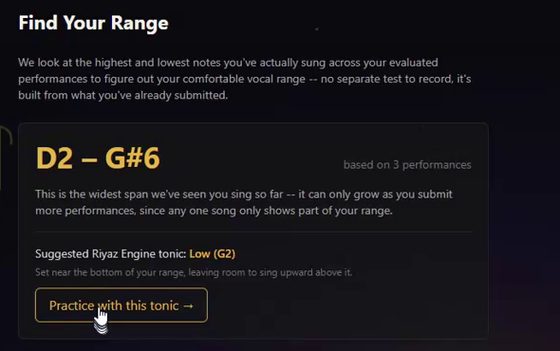
Because it comes from real singing, it can only grow as you submit more performances. One song only shows part of your range, so do not worry if the first number looks narrow.
Turning your range into your best key
In Hindustani music the choice is called picking your Sa, and it matters more than any other setting. A good rule of thumb is to set Sa near the bottom of your comfortable range, so you have room to sing upward from it, since most phrases move above Sa. That is exactly what the app suggests: a tonic near the bottom of your range, with room above it. Our guide to finding your Sa explains the reasoning in more detail.
From the range screen you can go straight to a drone practice session at that tonic, so you start practising in a key that suits your voice rather than the one a recording happened to use.
Using your range in everyday practice
- When a song feels too high, sing it a few notes lower rather than forcing it. Pitch is a choice, not a test.
- If your voice cracks near the top of your range, you are probably meeting your vocal break. Read why voices crack on high notes.
- Warm up before you test the edges. These exercises take five minutes.
- Check back every few weeks. A range that has grown is one of the clearest signs of progress.
Submit a performance and see the range and starting note that fit your voice.
Get started free